
What happens when you stop looking for places and start looking for people?
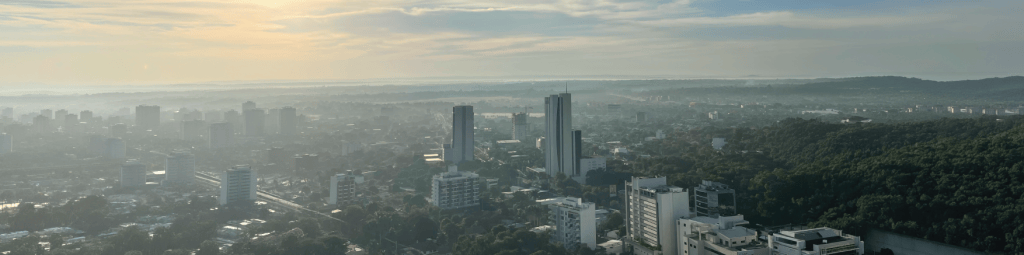
I’m in Paraguay right now. Moved here to set up my residency, and learning Spanish in the process, badly, but with enthusiasm..
My language school organized a padel event last week, which is basically the Paraguayan equivalent of “let’s socialize but make it sporty.”
For the record, the first time I played padel in Paraguay I broke my finger, detached bone, detached tendon, surgery in a Paraguayan hospital…
But that’s a story for another time. And between one terrible serve and the next, I found myself telling my life story to a Canadian girl who’d just moved here. Ten years of moving around. Australia. Bali. Thailand. Vietnam. Now here.
She listened, nodded, and then asked me something:
“But which place actually felt like yours?”
And I stood there, racket in hand, sweating in the Asuncion humidity, completely unable to answer. After all these years, I’d never actually stopped to think about it. My mind is always too busy racing toward the future to sit with the past. (something that I need to adjust)….
The Shift You Don’t See Coming
Here’s something that happens after a decade of traveling that nobody warns you about: the places stop being the point.
Don’t get me wrong, they’re still beautiful. Every new city still has that first-morning magic, the one where you walk outside and everything feels electric because it’s unfamiliar. But after ten-plus years, a sunset in Bali and a sunset in Lisbon and a sunset in Chiang Mai start to look… similar. The cafes change names but serve the same oat milk latte. The coworking spaces have different logos but the same IKEA desks.
At some point, without really noticing, I stopped searching for a place and started searching for a community. For people who get it, the “it” being this strange, beautiful, exhausting way of living that doesn’t fit neatly into any box society has built.
And when I looked back at everywhere I’d been through that lens, things started to make a lot more sense.
Bali: The Beautiful Lie You Need to Believe
Let’s start with Bali, because everyone starts with Bali.
And honestly? It’s stunning. The rice terraces, the sunsets, the smoothie bowls that cost less than a coffee in Milan. You live well, you spend little, and every corner looks like a content opportunity.
But here’s the thing about Bali that nobody tells you when you’re scrolling through those “I left my 9-to-5 and moved to Canggu” reels:
Bali is the starting line. It’s the place you go when you have a dream and no proof that it’ll work. When you’re twenty-something, freshly out of a corporate job or a university you hated, and you’ve read enough Tim Ferriss to believe you can build a six-figure business from a beanbag chair.
And there’s nothing wrong with that. Truly. We all need to start somewhere, and Bali wraps that beginning in warmth and cheap rent and beautiful chaos.
But there’s also a lot of noise. A lot of people selling courses about things they haven’t actually done. A lot of “branding experts” who’ve been freelancing for three months. A lot of vision boards and very few spreadsheets.
The community in Bali is huge, energetic, and inspiring, but it’s also young. Not in age, necessarily. In experience. Everyone is at the beginning of something, and that energy is contagious. Until you realize you’ve outgrown it.
Bali is the dream before the reality check.
I loved it. I needed it. But I wouldn’t go back, not because it changed, but because I did.
Chiang Mai: Where I Was Lost Too
Chiang Mai is harder to pin down. And honestly, so was I when I was there.
On paper, it makes sense: it’s cheap, the food is incredible, the coworking spaces are solid, and there’s a real community of people who’ve been at this for a while. It’s not as flashy as Bali. The Instagram content isn’t as pretty. And that’s kind of the point.
Chiang Mai has this energy where entrepreneurship and spirituality are so tangled up you can’t tell where one ends and the other begins. Half the conversations are about funnels, and the other half are about chakras. And somehow both feel equally vague.
But here’s the thing I need to be honest about: a lot of people in Chiang Mai felt a little lost, and I was one of them. I was in a period of my life where I didn’t really know what I was building, or why, or for whom. And maybe that’s exactly why I ended up there. The city attracts people who are processing something, even if they’re not sure what.
And you know what? There’s something beautiful about that. Because the community I found in Chiang Mai – underneath the chakra talk and the funnel obsession – was genuinely supportive. People checked in on each other. People shared what wasn’t working, not just what was. There was a vulnerability there that I didn’t find in Bali, where everyone was too busy performing success to admit they were struggling.
I think my perception of Chiang Mai says more about where I was in my life than about the city itself. And looking back, I realized that I want a piece of that in whatever community I build next, that rawness, that willingness to say “I don’t have it figured out” without it being a branding exercise.
Hanoi: The Hub That Never Forms
I spent a month and half in Hanoi. And I tried, I really tried, to find a community there.
But Hanoi doesn’t work like that. Everyone I met was passing through. Ten days, two weeks, gone. You’d have a great conversation at a coffee shop, exchange Instagrams, and by the time you thought about grabbing dinner, they’d already be on a bus to Sapa.
It wasn’t anyone’s fault. Hanoi is a transit city, not a landing city. People come to visit, not to stay. And when nobody stays, there’s no time for connections to grow roots.
I only spent few weeks there, so maybe I’m wrong. Maybe there’s a deeper community I didn’t find. But what Hanoi taught me is that a hub isn’t just about the place, it’s about the people who decide to stay. Without that, you’re just surrounded by beautiful strangers.
Paraguay: Nobody Comes Here by Accident
And then there’s Paraguay.
Let me be very clear: you don’t end up in Asuncion because you saw it on a “Top 10 Digital Nomad Destinations” list. You don’t come here for the nightlife, the coworking aesthetic, or the Instagram content. There are no rice terraces. There are no smoothie bowls with edible flowers.
You come to Paraguay because you’ve thought about it. Hard.
The people I’ve met here — almost all of them — share one thing in common: they don’t fit the standard model. They’re not anti-system in a performative way. They’re just… done. Done with tax structures that don’t make sense for how they live. Done with countries that want you to be physically present to be considered a resident. Done with the idea that you have to pick one place and stay there.
Paraguay gives you residency without asking you to stop moving. It gives you a base without demanding a cage. And for someone like me, a slow traveler who wants roots without walls, that’s everything.
There’s no glamour here. Nobody’s selling you a dream. And maybe that’s exactly why the people who end up here tend to be the most intentional ones I’ve met.
What the Hub Says About You
Here’s what I’ve figured out, after years of moving, working, and watching other people do the same:
The place you choose says more about where you are in your journey than any business plan ever will.
Bali is for beginners, and I mean that as a compliment. It’s for people brave enough to jump before they know how to land.
Chiang Mai is for the in-between. For people processing something, and finding each other in the process.
Paraguay is for people who’ve already decided. Not on a destination, on a way of living.
I’ve been all three of those people. And none of those phases was wasted.
The Part Nobody Talks About
Every digital nomad guide will give you a comparison chart. Cost of living. Internet speed. Visa requirements. Number of coworking spaces per square kilometer.
What none of them tell you is that picking a place is really about picking a mirror. You go somewhere, and that place reflects back who you are at that moment. Bali reflected my ambition. Chiang Mai reflected my confusion, and my need to be held by a community that understood it. Paraguay reflects my need for freedom, the kind where no country tells you that you have to sit inside its borders for 180 days just to keep your life in order.
And I think that’s the real answer to “Where should I go?”
Don’t go where the Wi-Fi is fastest. Go where the version of yourself you’re becoming would actually want to live.
Veronica,
Currently in Asuncion. (Paraguay)
“Where nobody comes by accident, but the sidewalks will still trip you up.”


Leave a Reply